The Paths You Actually Walk
What the second week of January reveals about who you already are
The second week of January. Gym memberships activated. New weight loss plan in place. The diary cleared, the intentions set, the fresh start declared.
By now, some of it is already starting to collapse. The slow return to familiar grooves. The snooze button. The evening glass of wine. The scroll before bed.
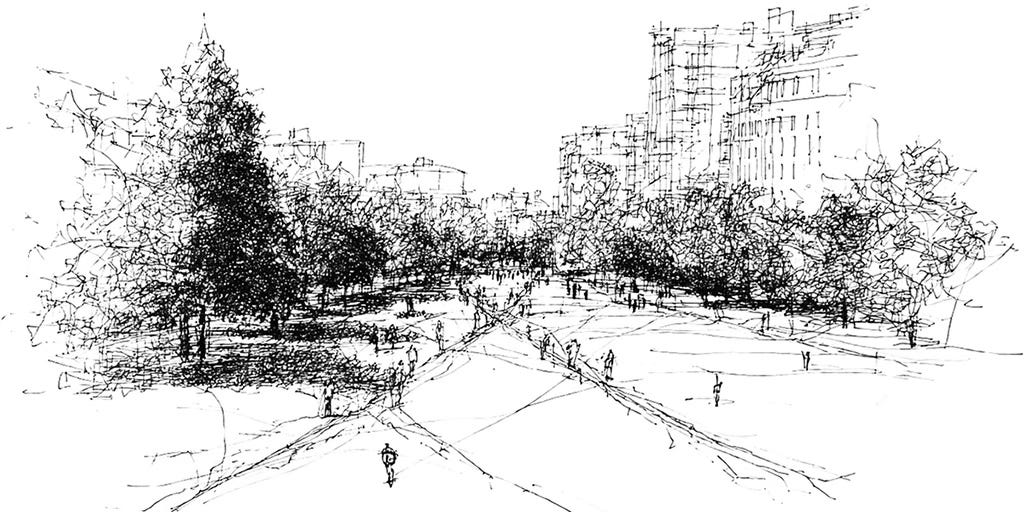
A desire line becoming visible.
Urban planners know about desire lines. The unofficial paths worn into grass by people ignoring the paved walkways. The gap in the hedge where students cut through. The muddy diagonal across the park that exists because planners put the path in the wrong place.
Desire lines reveal where people actually walk when given the choice.
Your habits work the same way.
January thinking assumes blank terrain. Fresh start. New year, new you. As if December 31st erases the paths you have been walking for years.
Real lives are layered landscapes. The grooves are already there - worn by repetition, deepened by stress, smoothed by comfort. When life applies pressure, you do not walk where you intended. You walk where the path already exists.
Watch what survives tiredness
When you are exhausted, decision-making becomes expensive. The brain economises. It follows existing paths because forging new ones costs energy you do not have.
What you do at 10pm after a hard day is your desire line. The path worn so deep that walking it requires no thought at all.
The same is true of stress. Of boredom. Of loneliness. Each pressure reveals a different set of grooves. Each shows you who you are when intention runs out and default takes over.
The asymmetry nobody mentions
They do not erase the path.
Skip the gym for a week and the old groove is still there, waiting. “Falling off the wagon” feels instant because you did not lose your progress. The new path was not yet worn deep enough to survive pressure.
The old paths took years to form. The new ones are still faint tracks in tall grass. This is asymmetry. The playing field was never level.
Where this shows up at work
Think about how you handle your inbox. You might decide to check email only twice daily - 10am and 3pm, focused and intentional. That is the paved walkway.
But watch what happens when a project goes sideways. When someone is waiting for an answer. When anxiety spikes. The old path reappears: constant checking, scanning for threats, seeking the brief relief of an empty notification badge.
The groove runs deeper than email addiction. You were using inbox management to regulate anxiety. A pattern beneath the surface behaviour.
Or take meetings. You intend to hold boundaries - only accepting invitations aligned with your priorities, blocking deep work time, saying no to calendar clutter. Then your manager asks if you can join “just this once”. A colleague needs your input. The stakes feel real.
Within a fortnight, your calendar looks exactly like it did in December. The desire line ran through saying yes. That is where your feet actually go under pressure.
What this means for how you work
James manages a team of twelve. Every January he commits to delegating more - developing his people, freeing his time for strategy. He even takes a course on it.
But by February, he is back in the weeds. Reviewing every output. Fixing problems himself. Staying late to ensure quality. The path back to control is worn smooth by a decade of walking it.
The resolution made sense. The groove just ran deeper than he thought. Control under stress felt safer than trust under uncertainty. His feet found the old path before his head noticed.
He started asking different questions. Instead of “why am I bad at delegating?” he asked “what makes the control path feel safer?” The answer turned out to be specific: handover moments when quality felt uncertain. Those junctions needed work. The rest of the path could stay.
The honest question
What do you reliably return to?
Asked with curiosity, without judgement.
What survives your worst days? What do you reach for when comfort is required? Where do your feet actually go when your head stops directing them?
These are desire lines to read. They tell you what paths exist in your landscape - some worth keeping, some worth slowly rerouting, all worth understanding.
Why resolutions fail
Resolutions fail because they fight the terrain. They assume willpower can override geography. That a decision made on January 1st can redirect paths worn over decades. That you can simply choose to walk differently.
You cannot yell at a desire line. You cannot shame a path into disappearing.
You can only build a better path. One that runs closer to where you actually want to go. One that gets worn deeper each time you walk it. One that eventually becomes the default - not through force, but through repetition.
That takes longer than January.
Where you are now
So here you are. Second week of the new year. Some intentions kept, others already starting to slip.
You are seeing your own landscape clearly, perhaps for the first time. The paths you actually walk. The grooves that survive pressure. The terrain you are working with, rather than fighting against.
Call it reconnaissance. You cannot change what you refuse to see clearly.
The paths are your starting point. You cannot get anywhere without knowing where you already are.
Paul Iliffe is the author of The Human Thread: What Really Matters in the Age of AI. This essay explores themes from Part 1: The Self, particularly the frameworks on habits and behaviour.